
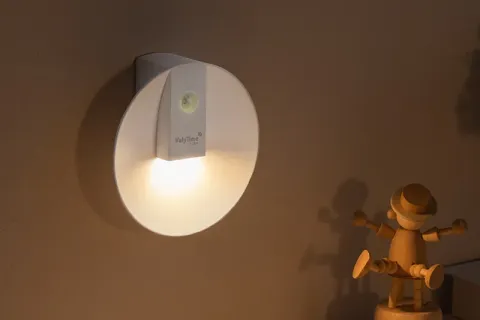
Most motion sensor night lights currently on the market use an integrated LED design. Integrated LED lamps integrate an LED light source with a circuit module, heat sink, and sensor. Unlike traditional light bulbs, integrated LED light sources are not removable or replaceable components.

LEDs (Light Emitting Diodes) are solid-state light sources that generate light using semiconductor materials. Compared to traditional incandescent and fluorescent lamps, LEDs offer several distinct advantages, making them particularly suitable for use in dressing table lighting.
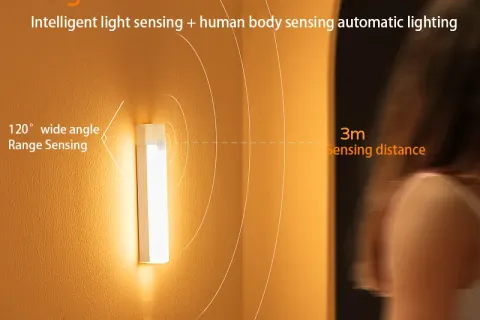
Motion-activated LED lights rely on accurate sensor detection to operate. If the sensor misoperates, the light may turn off without apparent cause. Common causes of malfunction include: • Improper sensor placement • Environmental interference • Small sensing area
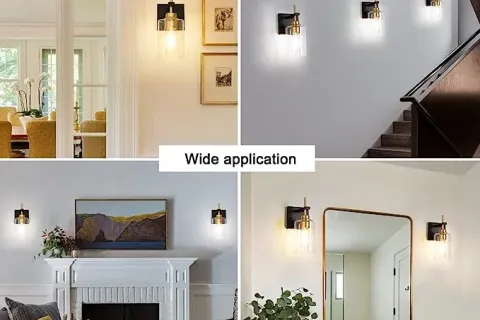
• For a single person: One or two vanity wall lights are sufficient. • For two people using the bathroom simultaneously: We recommend at least three vanity wall lights, typically on both sides and one above, to ensure adequate facial illumination for each user.

Possible causes of a motion sensor night light remaining on at night: 1. Oversensitive sensor 2. Improper sensor placement 3. Changes in ambient temperature and humidity 4. Sensor malfunction or failure 5. Low battery 6. Human interference or external factors
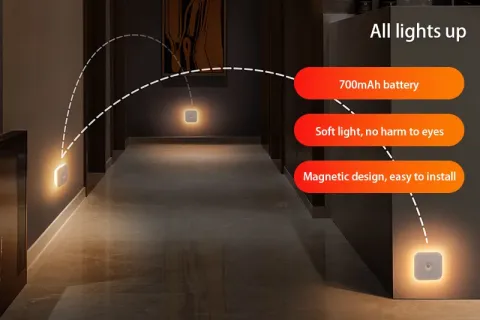
A magnetic LED night light is a lighting device that integrates an LED light source and utilizes a magnetic design. Unlike traditional night lights that are fixed to a socket or powered by batteries, magnetic LED night lights use built-in magnets or external metal brackets to attach or attach to various metal surfaces, allowing for flexible installation and mobility.
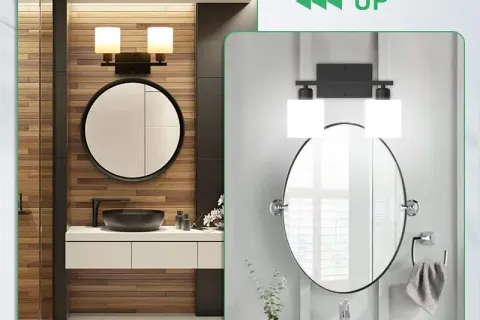
The bottom edge of an LED wall light fixture should be installed 30 to 36 inches (approximately 76 to 91 cm) from the vanity surface. This height ensures that the light directly hits the user's face and avoids shadows caused by angles that are too high or too low.
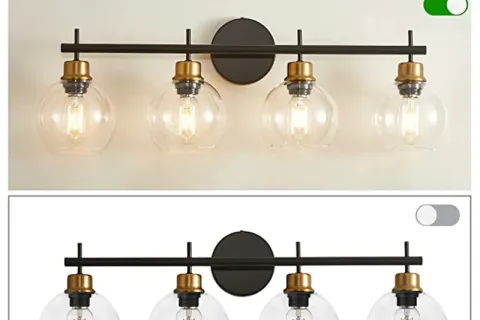
Most LED wall light fixtures are fixed to the wall using screws or nails. While this installation method ensures stability and security, improper installation can leave marks on the wall, especially when removing the fixture, as screw and nail holes often leave marks on the wall.

In professional lighting terminology, "vanity" refers to the dressing area, often closely associated with personal grooming, makeup, and skincare. "Wall light" describes its installation method—a fixture mounted on the wall. Therefore, the combined "vanity wall light" directly describes a lighting fixture installed on the wall of the dressing area.
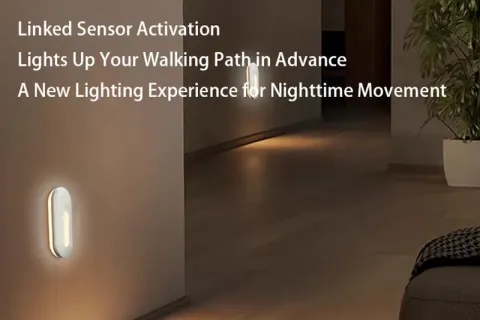
Choosing the right sensor type based on your needs can effectively improve the performance of your light fixture. For example, if the main application is in a home garden or front door, a PIR sensor is an ideal choice; if a wider detection range is required, a microwave or ultrasonic sensor may be more suitable.
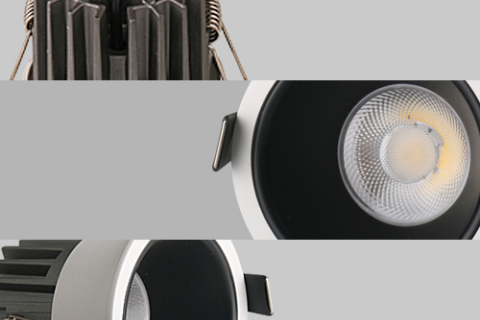
LED spotlights are classified into the following types: 1. Classification by Beam Angle • Narrow Beam LED Spotlights • Medium Beam LED Spotlights • Wide Beam LED Spotlights 2. Classification by Design • Recessed LED Spotlights • Surface-Mounted LED Spotlights • Portable LED Spotlights • Waterproof LED Spotlights 3. Classification by Color Temperature • Warm White LED Spotlights • Cool White LED Spotlights • RGB LED Spotlights
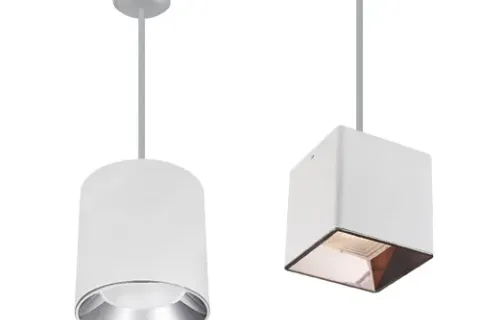
If you're looking for simple, even lighting, round LED lamps are undoubtedly the better choice. If you prefer a modern, unique decorative effect, square LED lamps are more suitable. Ultimately, consumers can choose the most suitable LED lamp based on their space needs, design style, and desired lighting effects.