

The color rendering index (CRI) is an optical indicator proposed by the International Commission on Illumination (CIE) to measure the accuracy with which a light source reproduces the colors of objects. It is expressed as a percentage; the higher the value, the more accurate the color reproduction of the light source.
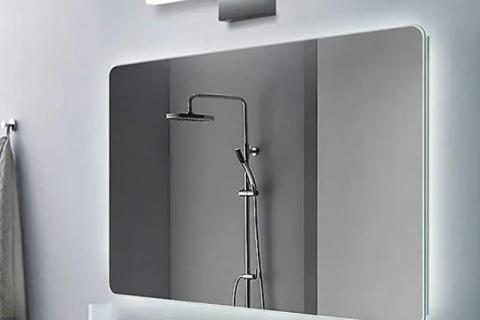
Key Eye-Friendly Parameters for LED Vanity Light Fixtures: 1. Luminous Flux (Brightness) 2. Color Temperature (Cool or Warm) 3. Color Rendering Index (CRI or Ra value) 4. Blue Light Hazard and Wavelength Control 5. Flicker-Free Design 6. Beam Uniformity and Anti-Glare Design 7. Power and Energy Efficiency 8. Adjustable Light Modes and Memory Function 9. Light Decay and Lifespan

• For mirrors less than 60cm wide, one symmetrical bathroom vanity light fixture can be installed. • For mirrors between 60cm and 120cm wide, two symmetrically arranged vanity lamps are recommended. • For mirrors exceeding 120cm or for vanities used by two people, consider three or more light fixtures or an integrated front light strip design.

Yes, but certain installation principles and conditions must be met. From a lighting design perspective, installing bathroom vanity light fixtures above a mirror is a common and widely accepted lighting method. It can directly illuminate the entire face, avoiding shadows concentrated on the chin or eyes

Because bathrooms are humid environments, electrical safety is paramount for prolonged use. Choose bathroom vanity light fixtures from reputable manufacturers and with an IP44 rating or higher. They are safe for extended use.
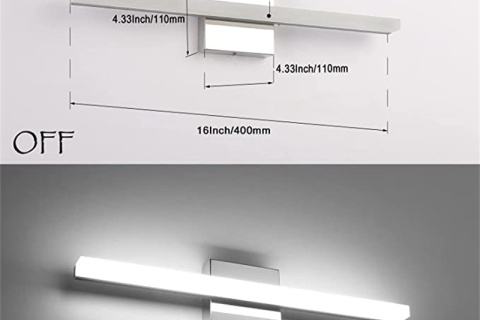
LED vanity light fixtures typically feature a frosted cover or light diffuser design, providing a soft and even coverage of the face, avoiding glare and partial shadows. Traditional bulbs, on the other hand, produce concentrated light with noticeable spotlights.

Installing lighting above the vanity is not only a functional consideration; it also contributes to the overall comfort of the bathroom space. Effective lighting can reduce shadows and uneven lighting, creating a bright, soft glow around the mirrored area and preventing visual fatigue caused by unpleasant lighting.

The width of bathroom vanity light fixtures must first meet scientific requirements for light coverage. The human face is a three-dimensional curved surface. If the fixture width is smaller than the mirror width, uneven lighting can easily occur.

—The Necessity of Bathroom Vanity Light Fixtures! Bathroom vanity light fixtures not only enhance daily convenience but also play a vital role in aesthetics, health, and safety: 1. Improve lighting quality 2. Reduce health risks 3. Enhance quality of life 4. Ensure safety and durability
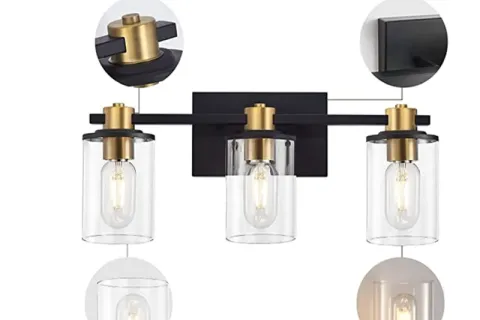
When choosing a vanity light fixture, it's important to first understand its basic functional requirements. Light is a key factor influencing makeup application, so vanity light fixtures must not only provide ample illumination but also ensure both quality and comfort.

The higher the CRI of vanity light fixtures, the more realistic the colors appear. Especially during makeup application, a low CRI can easily cause a color cast. Therefore, vanity light fixtures should use LED lamps with a CRI ≥ 90.

The installation height of the lamp should be coordinated with the height of the vanity to ensure that the lighting covers the entire vanity area while avoiding too high or too low illumination angles. Generally speaking, the height of the vanity ranges from 70-90 cm, so the installation height of the lamp should also be fine-tuned according to this range.