
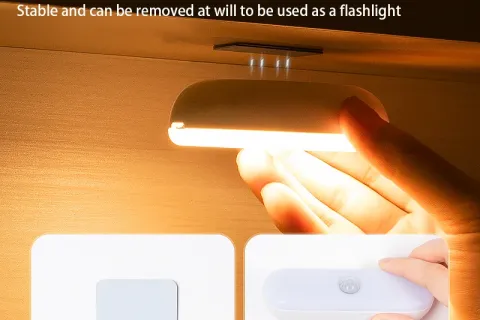
Most motion activated night lights do not rely on WiFi to operate. They use built-in sensors and light-sensing modules for automatic sensing and illumination. This means that even without a WiFi network, motion activated night lights can still trigger illumination through motion sensing and automatically adjust brightness when ambient light is insufficient.
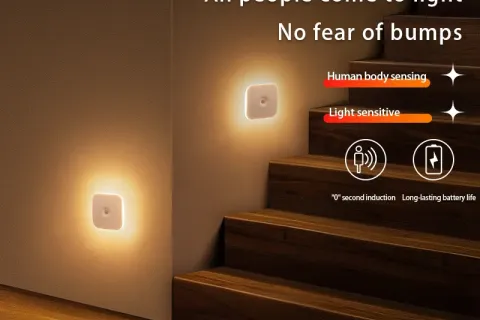
Factors that can interfere with motion sensor night lights: 1. Temperature fluctuations and heat sources 2. Air flow and swaying curtains 3. Electromagnetic interference 4. Light fluctuations 5. Sensitivity setting issues 6. Humidity and moisture 7. Animal interference
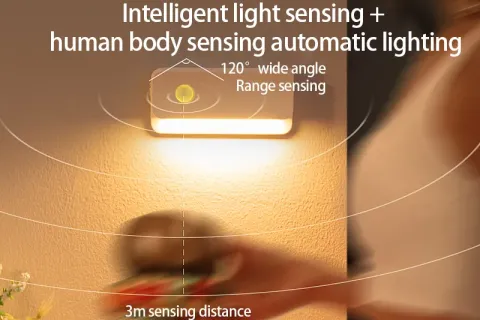
It depends on the area of the living room. Generally, a living room with an area of 20 to 30 square meters can be equipped with 1 to 2 motion sensor night lights for auxiliary lighting control; if the living room is large or requires zoned lighting, the number can be appropriately increased.