
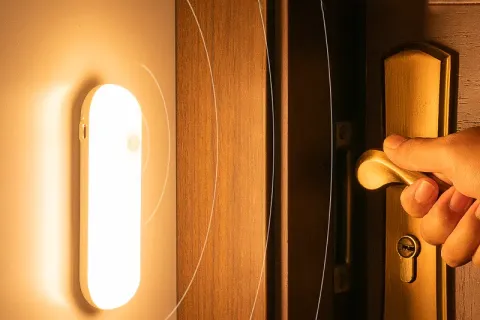
Common settings for the lighting status of motion sensor nightlights include: • 30 seconds • 1 minute • 3 minutes • 5 minutes If you want the motion sensor nightlight to stay on longer, simply adjust the delay parameter to a higher level.
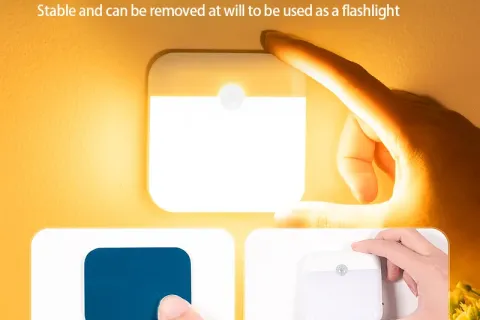
Power Input Port (Charging Function) This is the most important and common use. The vast majority of motion sensor nightlights with USB ports are for charging. These nightlights have built-in rechargeable lithium batteries that are charged via a USB connection to a power source.
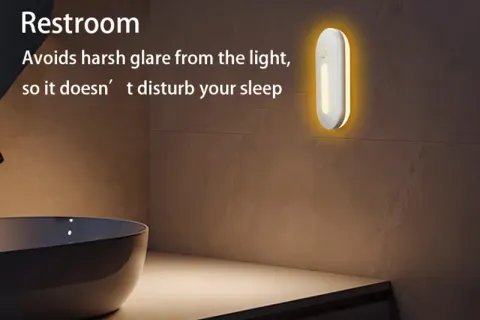
The key to bedroom lighting at night is to be both gentle and comfortable, and practical enough. This is precisely where motion sensor nightlights strike the perfect balance. They provide just the right amount of illumination in the dark, while automatically controlling their on/off state to avoid disturbing others or wasting energy.

Energy saving is one of the key reasons why families choose LED motion sensor nightlights. Traditional nightlights, if left on for extended periods, not only waste energy but also increase electricity bills. LED motion sensor nightlights, through intelligent sensing, achieve precise lighting, significantly reducing energy consumption.

It's often a working signal from the internal system of the light fixture, used to indicate different operating states, such as: • The sensor is detecting motion; • The device is in standby or pairing mode; • Low battery; • The sensor has entered test mode; • Circuit malfunction or photosensor error.
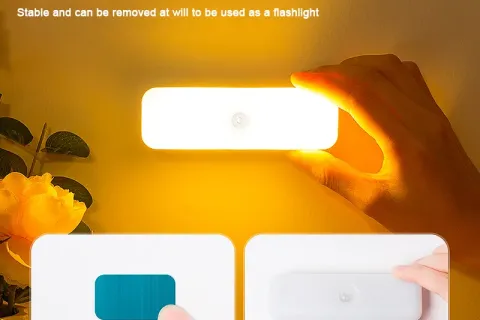
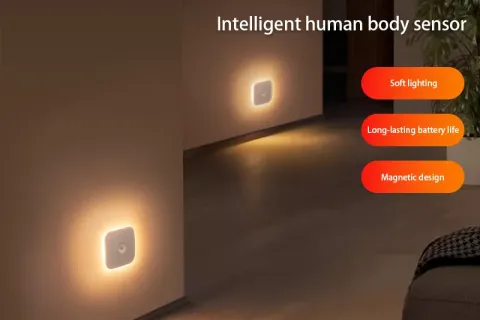
In fact, most modern motion sensor night lights do not require professional electrician installation. Many motion sensor night lights use built-in batteries and feature convenient magnetic backing or adhesive patch designs, allowing users to install them themselves without complicated tools or electrician support.
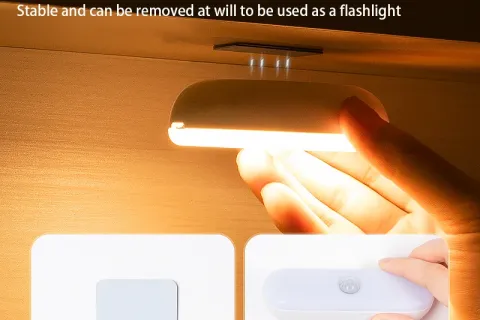
Most motion activated night lights do not rely on WiFi to operate. They use built-in sensors and light-sensing modules for automatic sensing and illumination. This means that even without a WiFi network, motion activated night lights can still trigger illumination through motion sensing and automatically adjust brightness when ambient light is insufficient.

From the outside, when the light is off, the nightlight appears to be completely "off"; however, the internal sensor module is actually still working. This is because, in order to constantly detect new motion signals, the motion sensor must be in standby mode, maintaining a small current supply.
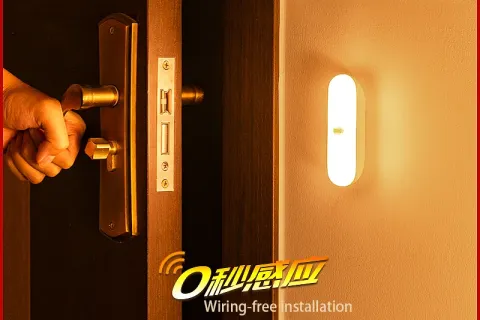
If your motion sensor night light indoor suddenly goes completely out, the most common cause of failure is usually the power supply. Whether battery-powered or plugged in, if the power supply cannot provide sufficient voltage, the system will not function properly.
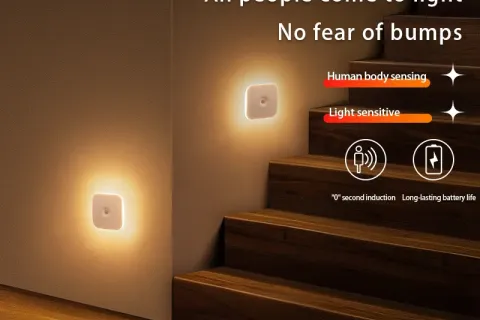
Factors that can interfere with motion sensor night lights: 1. Temperature fluctuations and heat sources 2. Air flow and swaying curtains 3. Electromagnetic interference 4. Light fluctuations 5. Sensitivity setting issues 6. Humidity and moisture 7. Animal interference
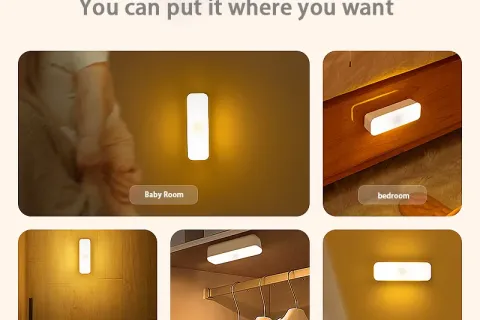
The core functionality of a motion sensor night light relies on its sensor to detect changes in the surrounding environment. When users cover the sensor with tape, they are effectively limiting its sensing range, preventing it from detecting motion signals.
Many motion sensor night lights allow the user to adjust the sensitivity. If the sensor sensitivity is set too high, it may detect minor environmental changes or motion far away from the light fixture. This is particularly noticeable in large spaces or when the light fixture is improperly positioned.